Mauritius travel guide
Things to do in Mauritius
From turquoise lagoons and waterfalls to volcanic craters and colonial heritage, here are 69 of the island's best attractions — and how to visit each one with a local driver-guide from Belle Mare Tours.
North Mauritius
The north is Mauritius' liveliest coast — Grand Baie's emerald lagoon, the longest white-sand beaches on the island, and the red-roofed chapel at Cap Malheureux looking out to the northern islets.
 Beach
BeachGrand Baie
Sheltered bay with an emerald lagoon, powder-white beaches, and the liveliest resort town on the island with vibrant nightlife and water sports.
Pereybère Beach
Popular family-friendly beach with a protected swimming area, soft sand, and close proximity to Grand Baie's restaurants and amenities.
 Beach
BeachTrou aux Biches
One of the island's finest beaches, blending seamlessly with Mont Choisy as the longest and most beautiful stretch of white sand on the north coast.
 Landmark
Cap Malheureux (Notre Dame Auxiliatrice)
Iconic red-roofed chapel at the northernmost point of Mauritius, overlooking the Indian Ocean and the five northern islets including Coin de Mire.
 Garden
Sir Seewoosagur Ramgoolam Botanical Garden
Lush 37-hectare botanical garden featuring giant water lilies, exotic flora, and serene pathways—one of Mauritius' most visited attractions.
 Culture & heritage
Maheswarnath Mandir
Mauritius' largest Hindu temple, built in 1888 and dedicated to Lord Shiva, featuring vibrant architecture and spiritual significance.
Coin de Mire (Gunner's Quoin)
Protected uninhabited island 8km north with crystal-clear reef snorkeling, diverse marine life, and a nature reserve with dramatic cliff vistas.
 Island
Ilot Gabriel
Pristine 42-hectare protected nature reserve island with unspoiled white-sand beaches, crystal-clear waters, and world-class snorkeling opportunities.
 Market
Port Louis Central Market
Historic Victorian-era market bustling with tropical fruits, fresh seafood, spices, and local crafts—the authentic pulse of Mauritian culture since 1839.
Mont Choisy Beach
One of the longest public beaches in northern Mauritius, Mont Choisy stretches in a wide crescent of white sand between Trou aux Biches and Grand Baie. Calm, shallow lagoon waters make it good for swimming, and a shady fringe of filao trees backs the shore. Popular with families and locals for picnics, kitesurfing and weekend gatherings.
Bain Boeuf Beach
A public beach near Grand Baie on Mauritius' north coast, fronting a shallow turquoise lagoon protected by a reef. Coin de Mire (Gunner's Quoin) island stands offshore, framing the view. Casuarina trees give shade, and the calm, gently sloping water suits families and swimming. It is quieter than nearby Grand Baie, with snorkelling spots and food stalls close by.
Pointe aux Piments
Pointe aux Piments is a quiet coastal village on the northwest shore between Balaclava and Trou aux Biches. Its public beach offers calm, shallow lagoon water sheltered by the reef, with rocky stretches alongside sandy patches. Popular for snorkelling, swimming and shore diving, it is less crowded than nearby Trou aux Biches and sits near the Mauritius Aquarium.
Anse la Raie
A quiet public beach on Mauritius's far north coast, between Cap Malheureux and Grand Gaube. Its shallow lagoon and steady cross-shore winds make it a well-known spot for kitesurfing and windsurfing. Filao trees line the shore for shade, and the calm water suits swimming. From here you can see the northern offshore islands.
Château de Labourdonnais
A restored 19th-century colonial mansion near Mapou, built in 1859 and furnished in period style. Visitors tour the house, stroll the surrounding orchards and gardens of fruit trees and palms, and sample products from the on-site rum distillery. Tastings of rums, fruit juices and jams are available, with a restaurant set among the grounds.
L'Aventure du Sucre
Housed in the restored Beau Plan sugar factory near Pamplemousses, this museum traces Mauritius's sugar industry and its links to slavery, indenture and rum. Original machinery and interactive displays explain cane processing, and the visit ends with a tasting of unrefined sugars and local rums. A self-guided route suits families and history-minded travellers alike.
East Mauritius
The east coast is calm and unspoilt: Belle Mare's six-kilometre beach, the lagoons of Île aux Cerfs and authentic fishing villages. This is Belle Mare Tours' home turf, so pickups here are quick and cheap.
Belle Mare Beach
One of Mauritius's longest and most tranquil beaches stretching over six kilometers with soft white sand and calm turquoise waters.
 Island
Île aux Cerfs
A private island off Trou d'Eau Douce featuring pristine beaches, lagoons, water sports, adventure park, and an 18-hole golf course.
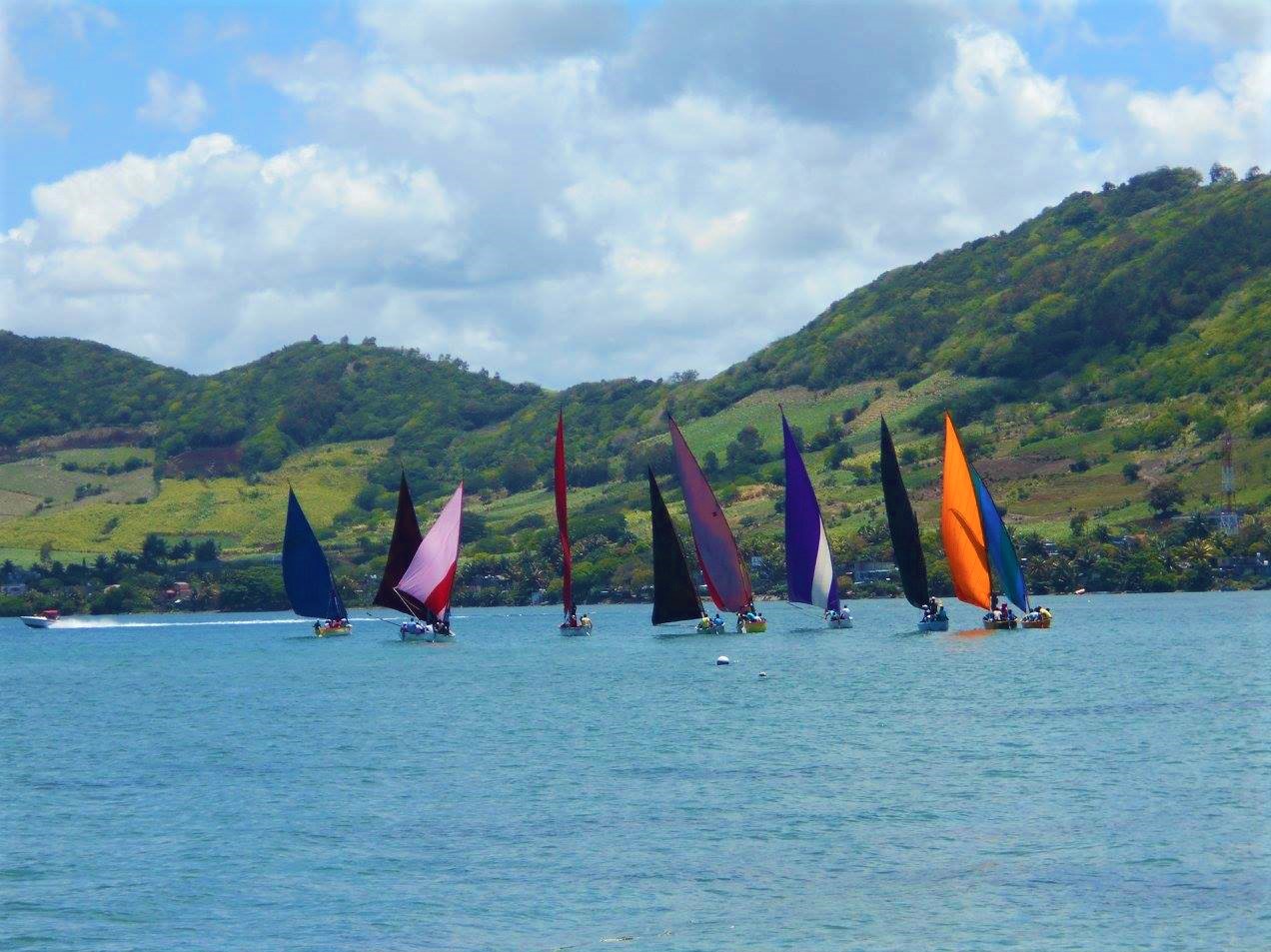 Waterfall
Grand River South East Waterfall
A scenic waterfall where Mauritius's longest river cascades into the ocean, accessible by a dramatic boat journey through mangrove-lined waters.
Pointe d'Esny Beach
A serene, often-empty white-sand beach on the southeast coast with shallow lagoon waters, ideal for morning walks as the tide recedes.
 Nature & wildlife
Bras d'Eau National Park
A northeast coastal national park with mangrove forests, hiking trails, bird-watching opportunities, and scenic viewpoints overlooking the Indian Ocean.
Trou d'Eau Douce
A charming authentic fishing village and departure point for island excursions, offering traditional Mauritian character with direct boat access to Île aux Cerfs.
 Market
Central Flacq Market
Mauritius's largest vibrant open-air market bustling with local vendors selling fresh produce, seafood, textiles, and authentic street food, best visited Wednesdays and Sundays.
 Nature & wildlife
La Vallée de Ferney
A wildlife reserve and nature sanctuary in the southeast featuring hiking trails, 4x4 tours, bird-watching, and waterfall pools for swimming.
Roches Noires
Roches Noires is a quiet public beach on Mauritius's northeast coast, named for the dark volcanic basalt rock lining its shore. A sheltered lagoon offers calm swimming, while the surrounding area is known for lava-tube caves formed by ancient flows. With few facilities and a local feel, it suits visitors seeking a relaxed alternative to busier resort beaches.
Poste Lafayette
Poste Lafayette is a quiet public beach on Mauritius's east coast, known for its rugged shoreline, scattered rocks and strong trade winds. The exposed conditions make it popular with kitesurfers and windsurfers rather than swimmers. Backed by casuarina trees and a few coastal hotels, it offers an unspoilt, less-crowded alternative to the island's busier resort beaches.
Palmar Beach
Palmar Beach is a public stretch of white sand on Mauritius's east coast, near Belle Mare and Trou d'Eau Douce. A shallow turquoise lagoon protected by an offshore reef makes it calm for swimming, and casuarina trees behind the sand give natural shade. The east-facing shore is popular for sunrise views and quiet picnics.
Domaine de l'Étoile
A large private nature reserve in eastern Mauritius, covering roughly 2,000 hectares of valleys, rivers and forested hills. Visitors come for guided quad biking, buggy rides, horse riding, archery, hiking and ziplining across rugged terrain. The estate is also home to deer, wild boar and monkeys, and offers a restaurant with scenic views over the surrounding countryside.
South Mauritius
The wild south holds the island's most dramatic scenery — the Seven Coloured Earths at Chamarel, the tallest waterfall, the UNESCO-listed Le Morne mountain and clifftop viewpoints over the Indian Ocean.
 Nature & wildlife
Chamarel Seven Coloured Earth Geopark
Geological wonder featuring sand dunes of seven distinct rainbow colors set against tropical forest backdrops, a UNESCO-inspired natural marvel.
 Landmark
Le Morne Brabant
UNESCO World Heritage site with a 556-meter basaltic monolith offering panoramic views and cultural significance as a former refuge for escaped slaves.
 Waterfall
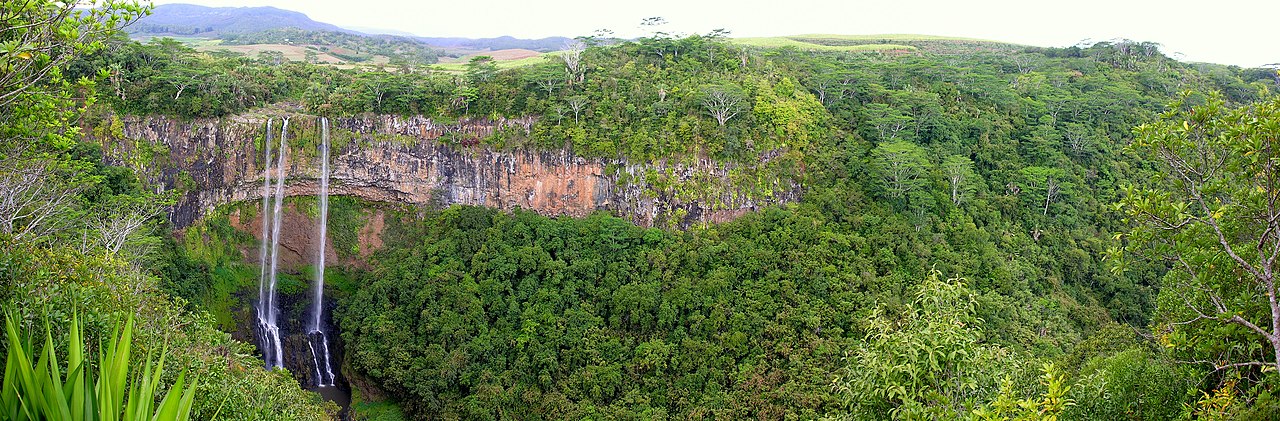
Chamarel Waterfall
Mauritius' tallest waterfall at nearly 100 meters, plunging dramatically from forested basalt cliffs into a lush gorge with accessible viewpoint platforms.
 Viewpoint
Black River Gorges Viewpoint
Spectacular panoramic vistas across deep valleys and native forests, offering some of Mauritius' finest views toward the west coast on clear days.
 Waterfall
Rochester Falls
Unique 10-meter waterfall surrounded by distinctive basalt column formations and lush jungle, creating a cinematic landscape near Souillac.
 Nature & wildlife
Ebony Forest Reserve
Restored endemic forest sanctuary hosting pink pigeons, Mauritius kestrels, and echo parakeets, with guided walks and panoramic forest viewpoints.
Macondé Viewpoint
Clifftop vantage point with dramatic ocean vistas of the Indian Ocean and coastal coves, though strong winds demand careful footing.
La Vanille Nature Park
Tropical forest reserve home to Nile crocodiles, giant tortoises, lemurs, and exotic wildlife, with guided tours through 3.5 hectares of biodiversity.
 Island
Île aux Aigrettes
Protected coral island reserve off Mahebourg featuring Telfair's skinks, colorful day geckos, and giant Aldabran tortoises, accessible by guided boat tour.
Gris Gris
Gris Gris is a rugged clifftop viewpoint near Souillac on Mauritius's southern coast, where there is no protective reef, so the open Indian Ocean crashes directly against the rocks. A short grassy headland trail leads past dramatic cliffs and the wave-battered "La Roche qui Pleure" formation. Bring sturdy shoes; swimming is dangerous due to strong surf.
Bois Chéri Tea Plantation
Mauritius's oldest and largest tea estate, set in the cool highlands of the Savanne district. A guided visit covers the working factory where leaves are dried, rolled and graded, plus a small museum tracing the island's tea history. It ends at a hilltop chalet overlooking Lake Bois Chéri, where you taste flavoured teas with views over the plantation.
Domaine de Saint Aubin
A historic 1819 sugar estate near Rivière des Anguilles, centred on a colonial mansion surrounded by sugarcane and tropical gardens. Visitors tour a small rum distillery producing agricultural rum from cane juice, plus vanilla and anthurium cultivation. The on-site restaurant serves Creole cuisine in the planter's house, making it a combined heritage, agriculture, and dining stop.
La Roche qui Pleure
A rugged basalt headland near Le Souffleur on Mauritius's wild south coast, where waves break against dark cliffs. Its name, "the rock that cries," comes from a profile resembling a weeping face, an effect attributed to the writer Robert Edward Hart. Visitors come for dramatic sea views, crashing surf, and the windswept, undeveloped coastline.
Blue Bay Marine Park
A protected marine park near Mahebourg on Mauritius's southeast coast, Blue Bay is known for its calm, shallow lagoon and one of the island's best-preserved coral reefs. Glass-bottom boat trips and snorkelling reveal living corals and reef fish. The white-sand public beach, shaded by trees, suits swimming and picnics in sheltered water.
 Landmark
Mahébourg
Mahébourg is a historic coastal town on Mauritius's southeast, founded in 1805 and named after governor Mahé de La Bourdonnais. Set on Grand Port bay near the 1810 naval battle site, it offers a lively Monday waterfront market, colonial architecture, the National History Museum, fishing boats, and views toward Île aux Aigrettes and the mountains.
Mahébourg Naval Museum
Housed in the 18th-century Gheude colonial mansion in Mahébourg, this museum records the area's maritime past, including the 1810 Battle of Grand Port between French and British navies. Exhibits feature relics salvaged from shipwrecks like the Saint-Géran, old maps, cannons, bells, and period furniture, offering insight into Mauritius's colonial and naval history.
Bel Ombre Nature Reserve
A private nature reserve in the hills above Bel Ombre on Mauritius's south coast, covering native forest and former hunting estate land. Guided 4x4 safaris and hikes reach viewpoints over the lagoon, the Frederica waterfall and trails through endemic vegetation where deer, wild boar and monkeys roam. Booking ahead is required for the guided tours.
Lion Mountain
Lion Mountain rises above Vieux Grand Port on the southeast coast, its ridge resembling a resting lion. The free, unmarked hiking trail climbs through forest and over rock to the "head," rewarding climbers with sweeping views over Grand Port bay, Mahebourg and the offshore islands. The steep scramble near the top suits reasonably fit walkers.
West Mauritius
The sunny west is built for adventure: Flic-en-Flac's reef, Casela's safari park, the Black River Gorges and boat trips to Île aux Bénitiers and Crystal Rock.
 Beach
BeachFlic-en-Flac Beach
One of Mauritius's longest and most beloved beaches, this 8km stretch of golden sand fringed with filaos trees offers excellent swimming, snorkeling, and water sports in crystal-clear turquoise waters.
BeachLe Morne Beach
A stunning beach backed by the iconic UNESCO-listed Le Morne mountain, this picturesque spot is perfect for swimming, snorkeling, windsurfing, and kite-surfing with pristine lagoon views.
Casela Nature & Leisure Park
A sprawling 350-hectare wildlife park featuring African savannah animals with thrilling activities including safari drives, zip-lining, lion walking, and camel rides.
Nature & wildlifeBlack River Gorges National Park
Mauritius's largest national park with over 50km of well-marked hiking trails, waterfalls, lookout points, and preserved forest featuring rare endemic bird species and indigenous plants.
 Landmark
Albion Lighthouse
A striking red-and-white heritage lighthouse built in 1910 standing 46 meters above Pointe-aux-Caves cliffs, offering spectacular views of the west coast and a small museum.
Île aux Bénitiers
An uninhabited islet accessible by boat tour from Black River, perfect for snorkeling at nearby Crystal Rock and experiencing pristine lagoon scenery.
 Culture & heritage
La Route du Sel (Tamarin Salt Flats)
An 18th-century salt flats heritage site spanning 20 hectares with over 1,600 basins showing traditional sea salt production, offering guided 15-minute tours of the last working salt farm in Mauritius.
BeachTamarin Beach
Tamarin Beach sits where the Rivière du Tamarin meets the sea on Mauritius's west coast. Unlike the island's lagoon beaches, it has open ocean rolling in, making it a well-known surf spot. The grey-gold sand, nearby salt pans and frequent dolphin sightings offshore draw both surfers and families. Sunsets here are a popular reason to linger.
La Preneuse Beach & Martello Tower
A public beach on Mauritius's west coast beside a restored Martello Tower, one of several coastal forts the British built from local basalt in the 1830s. The tower houses a small museum on its defensive design, slavery, and colonial history, with views over Tamarin Bay. Combine the exhibit with a swim and picnic under the casuarina trees.
Rivière Noire (Black River)
Rivière Noire is a coastal village and district on Mauritius's west coast, named for the river that empties here. It is the island's deep-sea fishing hub, with charter boats heading out for marlin and tuna. The bay sits below the Black River Gorges and near Le Morne, making it a base for fishing trips, beaches, and inland excursions.
Rhumerie de Chamarel
A working rum distillery set among sugarcane fields in the hills of Chamarel. Guided tours follow the process from cane crushing to fermentation, distillation, and ageing, ending with a tasting of agricultural rums and liqueurs. The on-site restaurant L'Alchimiste serves Mauritian dishes, making it a common stop alongside the nearby Seven Coloured Earths.
Crystal Rock
A jagged coral-rock formation rising alone from the shallow turquoise lagoon between Le Morne and Benitiers Island, off the southwest coast. Reached only by boat, it is a standard stop on catamaran and speedboat cruises, where visitors pause to photograph the rock against the bright water and swim in the surrounding shallows.
Trois Mamelles
Trois Mamelles is a distinctive three-peaked mountain rising near the centre of western Mauritius, between Henrietta and the Black River Gorges area. Most visitors stop at roadside viewpoints to photograph its triple silhouette and the surrounding sugarcane plains. Experienced hikers tackle the ridge trail for sweeping coastal and highland panoramas, though the scrambling sections demand care and a head for heights.
BeachAlbion Beach
A quiet public beach on Mauritius's west coast, fronted by a rocky shoreline and a small sandy stretch rather than a wide lagoon. It is best known for the nearby Albion Lighthouse, one of the island's few working lighthouses, perched on the cliffs above. Popular with local families and anglers, it offers calm sunset views and a low-key alternative to busier west-coast resorts.
Tamarin Salt Pans Viewpoint
A working coastal salt farm near Tamarin where seawater evaporates across a grid of shallow stone pans, leaving white salt harvested by hand. Roadside pullouts give views of the geometric basins set against the Black River mountains, especially photogenic in late afternoon light. A short, free stop for travellers passing along the west coast between Tamarin and Black River.
Central Mauritius
The cooler central plateau is green and scenic — the Trou aux Cerfs volcanic crater, colonial Eureka House, botanical gardens and the island's best mountain hikes.
 Viewpoint
Trou aux Cerfs
A dramatic 100-meter-deep volcanic crater surrounded by lush forest offering panoramic views of the central plateau.
Eureka House
A beautifully preserved 1830s colonial mansion museum with period furnishings, gardens, and nearby Eureka Waterfalls.
 Garden
Curepipe Botanic Garden
A sprawling 27-acre botanical garden featuring rare palms, a scenic lake, and the world's rarest palm tree.
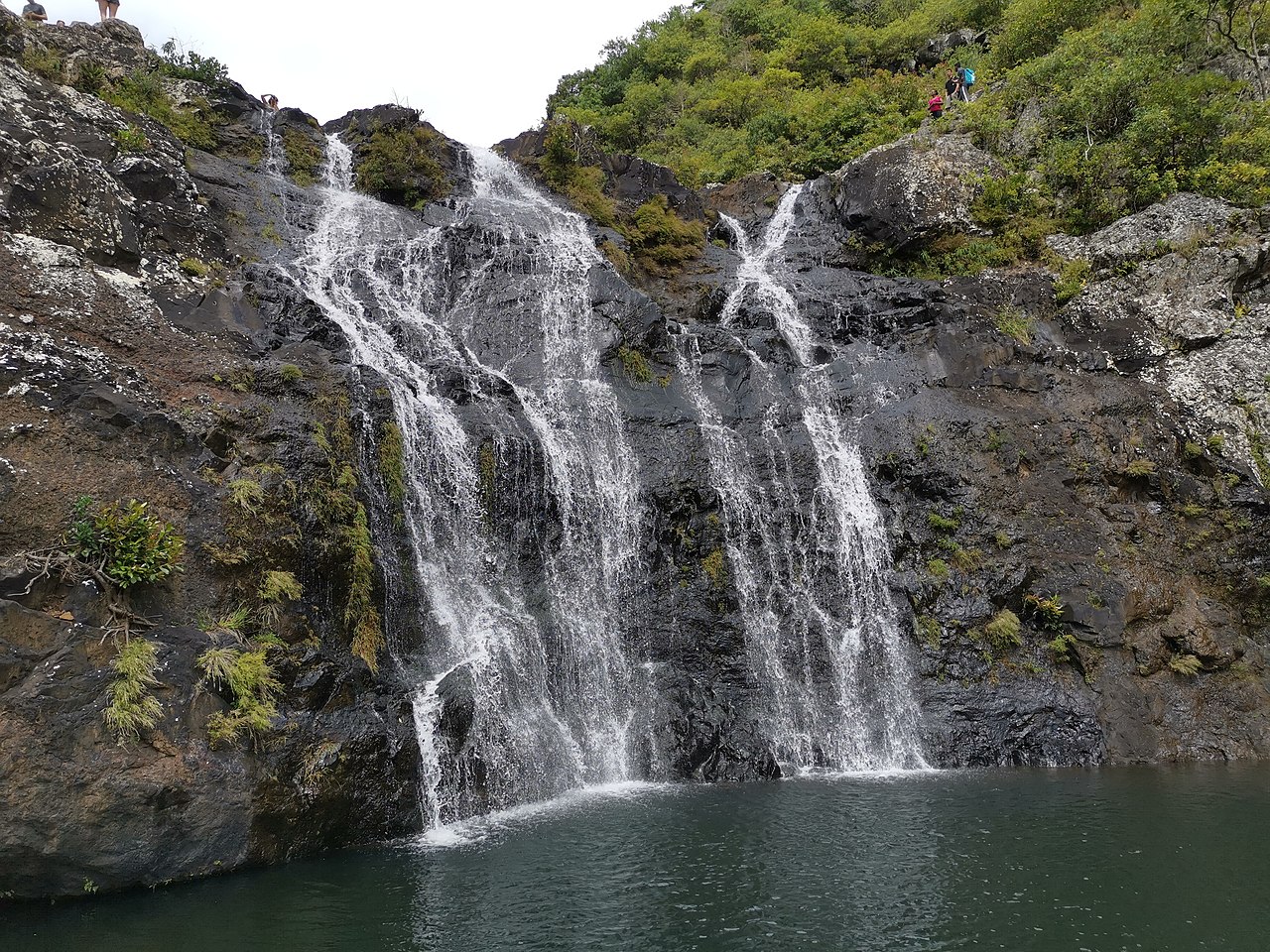 Waterfall
Tamarind Falls
A spectacular series of seven cascading waterfalls set in lush mountain scenery requiring a scenic hiking adventure.
 Viewpoint
Le Pouce Mountain
The third-highest peak in Mauritius offering panoramic views of Port Louis and surrounding plateau countryside.
 Viewpoint
Pieter Both Mountain
Mauritius' second-highest peak featuring a distinctive balanced rock formation at the summit and challenging scramble.
 Culture & heritage
Grand Bassin (Ganga Talao)
A sacred crater lake high in the southern uplands, regarded as one of the holiest Hindu sites outside India. Temples line the shore alongside towering statues of Shiva and Durga, and pilgrims gather here in vast numbers during Maha Shivaratri. Visit for the spiritual atmosphere, the lakeside shrines, and resident monkeys.
Corps de Garde Mountain
Corps de Garde is a distinctive mountain rising above Quatre Bornes in central Mauritius, reaching roughly 720 metres. A well-trodden hiking trail climbs through rocky terrain to the summit ridge, rewarding walkers with sweeping views over the central plateau towns, the west coast and surrounding peaks. The route is steep in sections, so decent footwear and an early start are advised.
Réduit (Le Réduit)
Le Réduit is the State House, official residence of Mauritius's President, set on a wooded plateau in Moka. The colonial mansion dates to 1748, when the French built it as a refuge for settlers. Its formal gardens, century-old trees and ravine viewpoints open to the public only on occasional open days, so check before visiting.
See them your way
Pick a ready-made sightseeing tour, or design a custom day around the places you choose with our free AI road-trip planner — then book online in minutes with door-to-door pickup.